Thursday, April 12, 2018

Review: Exciting Cabaret With A Who's Who Of Famous Lesbians

By Ed Malin

Phoebe Legere, powerhouse musical theater performer, is back with a charming new show called Speed Queen. Lissa Moira directs and lights this energetic, boogie-woogie piano and accordion-filled true story about the dapper, butch, 20th Century boat racing woman professionally known as Joe Carstairs.
During World War I, the sixteen year-old Marion Barbara Carstairs (she dislikes this name) is an ambulance driver. She develops a taste for going fast, prefers to be called Joe, and after the war heads to "Gay Paree". There, he meets and falls in love with Dolly Wilde, niece of legendary author Oscar Wilde, who was jailed for homosexual behavior.  Dolly's gender expression tends the other way from Oscar's; she is very assertive and masculine.  Next, Joe heads to London, a place where, seeing as many young men were recently killed in battle, young women are cross-dressing in dinner jackets and going to cocktail parties.  Natalie Barney hosts a salon, in which she sings the " Hymn to Aphrodite" by Sappho. Aphrodite is the Greek goddess of love.  The poet Sappho is known for running a school for women on the island of Lesbos; more on that later. Radclyffe Hall, lesbian literary icon, is another of Joe's lovers. Legere portrays most of these characters, who surely deserve a greater mention in history. First, Joe runs an upscale chauffeur business in which he only employs female drivers.   Joe receives a Steiff doll named Lord Tod Wadley from his wildly partying girlfriend, Ruth Baldwin. Tod Wadley will remain with Joe for life. He gets a privileged perch inside the piano during the show. Joe also meets and dates the outlandish actress Tallulah Bankhead, who is as out lesbian as one could be in the 1920s. Tallulah, putting her foot on the piano keys, provides us with a "footnote": " Imitation is the sincerest form of flatterty that medicrity can pay to greatness." This quote comes from Oscar Wilde, and is used apropos of the women's fashion trends Tallulah has started. Tallulah explains much better (and hates on Bette Davis) as she sings us "Bitch Stole My Look".  In the world of entertainment, we now have "imitainment".
Joe, however, creates his own style.  Joe is the child of wealthy people who struggled with addiction (song: "Mummy Was a Junkie").  Upon his mother's death in 1925, now able to afford whatever he wants, Joe is a prominent speedboat racer.  The captain's hat and jacket Joe has been wearing and which endear him to so many ladies look amazing when he gets into his boat.  Onstage, a gorgeous wooden speedboat called the Estelle (boat design by Lytza Colon) is suspended from ropes (rigging by Janet Clancy) and triumphantly driven to victory.  Oddly enough, the sexist male judges rob Joe of victory (throwing the name " Betty" around as an added insult).  Joe is moved to buy an island in the Bahamas called Whale Cay and turn it into a lesbian paradise.  As German film actress Marlene Dietrich's yacht approaches, Joe sings "Welcome To Lesbian Island".  They enjoy life and reminisce about gay times in Weimar Germany, Greta Garbo and other lovers of women, but, in 1932, the world is becoming less tolerant.  Dietrich's sentiment, " you need to know when the party's over and get the @#%& out" are sadly echoed when Ruth Baldwin dies of an overdose in London in 1937.
Joe continues to enjoy his private, shotgun-controlled island. In a beautiful, cosmic finale, Death (David "Zen" Mansley) invites Joe and Lord Tod Warley into the Estelle to float once more around the audience.
When Phoebe Legere is dancing (choreography by Shawn Rawls) or otherwise not at the piano, additional music is played from the Speed Queen Band: Phoebe Legere on piano,  Sean Harkness on guitar, Rob Mitzner on drums, Skip Ward on bass. All of the songs are rousing.  I sat in the front row and could really feel Phoebe Legere's energy throughout.  She is a consummate preformer  whose work you simply  must experience. Hats off to Lissa Moira as well for bringing out so many unique, unapologetic female voices. Between them, they have done a lot of work which examines the nature of stardom.  Surprisingly, this is their first collaboration.  I will definitely be interested in seeing any future collaborations.

Sunday, December 3, 2017

Review: Drew Droege's Wild Ride

By Michael Block

Weddings. They bring family and friends together to celebrate the bond of two people in love. But the legal union of matrimony isn’t always for everyone. We all may have that right in this country today, but in certain cases, some people are better off on their own. Enter Gerry, the main character of Drew Droege’s Bright Colors And Bold Patterns. Playing the Soho Playhouse, the return of Droege’s hilarious comedy continues to resonate despite a slightly dated message.
Gerry is invited to the wedding of Josh and Brennan. He and his old friend Dwayne, along with Mack’s boyfriend and his ex Neil, rent a house nearby. As soon as Gerry arrives, he starts talking about everything and seemingly never stops. A thesis in post marriage equality, Gerry questions why a big celebration and why marriage at all, ignited by the attire request on the wedding invitation. Bright Colors And Bold Patterns is Mr Toad’s Wild Ride of solo comedies. Droege’s writing is snappy and accessible. In a way, Gerry represents an “everygay” stereotype. Sure, this may offend some as the character of Gerry can simply be called “extra.” The conceit of the show Droege drafts is Gerry is the only seen character. He interacts with a trio of others despite not being present to the audience. So are these people real, unlike Gerry’s imaginary boyfriend he eventually reveals, or is he conducting the conversations he wishes he could have? The ambiguity plays highly into Droege’s quick tempo comedy, aptly directed by the brilliant Michael Urie, a sharp comedian in his own right. The combination of Droege and Urie is quite possibly why this production moves as swiftly as it does. With only one moment of reprieve for the audience, and actor alike, once you strap your seatbelt on, you’re off to the races. Droege bounces from menial stories to personal exposition to significant hot topics by balancing the weight for the audience without becoming daunting or overwhelming. The title of the play refers to a line on the card regarding the wedding attire. It is something shocking to Gerry. How dare anyone try to hide the pride at a wedding? This request plays a big part of the story yet it never fully resolved itself. We never quite get to see what Gerry is going to wear. Though, you can assume it’s up to us to decide. Will Gerry submit or is he playing by his own rules?
photo by Russ Rowland
Wearing two hats as writer and performer, Drew Droege seamlessly balanced the two. The character of Gerry is a loose lipped, mile-a-minute person who seems to have lost his filter. You might say he has verbal diarrhea. He’s the sort of person who has a plethora of thoughts, but when they leave his mouth, it’s certainly unrehearsed given the tempo and frequency of his observations. Droege is a high energy performer who has the ability to make his material fresh and new, fitting for this character. Droege crafts a character that is able to read anyone in the room while still remaining genuine. There is immense difficulty by being the sole performer on stage that is required to engage in conversation with unseen people. Droege remains present while listening to his imaginary scene partners. And this is a big part of where the comedy comes in.
Pairing Droege with Michael Urie is a winning combination. Urie pilots Droege through his unhinged character and his rollercoaster writing. Dara Wishingrad has designed an exceptional poolside getaway. It’s colorful splashes of white and blue mixed into the outdoor furniture sets a relaxing ambiance that easily puts your mind at ease. Wishingrad’s brilliant use of depth is extended into the depths of the stage which allows the audience to get a glimpse of the inside of the house. If ever there was a misfire, it’s the unfortunate black platform used to raise the dining table and chairs. The umbrella naturally gives levels and Urie only has Droege use the area late in the game. While it’s fine that the stage is black, there needed to be something, even if it was artificial grass, to cover up this evident theatrical platform.
Bright Colors And Bold Patterns is a mostly satisfying comedy that keeps the mind racing. In its return engagement, Drew Droege maintains the fun and quirkiness of his script. While it desires to be a beat or two shorter, Droege’s accessible commentary keeps the play current.

Monday, April 10, 2017

Review: Fame According to Kris

By Michael Block

She was crowned the winner of Lady Liberty Cycle 3 and now she's bringing her spin on the Kardashian momager to life in I Am Kris, a boisterous cabaret paying homage while poking fun. Jan Sport, the premiere Kris Jenner impersonator, gives you the only mashup of showtunes and Kardashian you'll ever need. Or, for that matter, want.
photo by Michael Block
Gracing the stage at the spiffy and luxurious Greenroom 42, New York's newest late night cabaret hot spot, Jan Sport parodies the world's most famous momager since Mama Rose. Spoofing Kris' ex's television series "I Am Cait," I Am Kris showcase the seven-step program to gaining fame. I Am Kris was the perfect marriage between drag and theater. Jan Sport brought a fully fleshed out narrative to the stage, something some other drag performers are unable to do in similar settings. Each step revolved around a spoken word lip sync accompanied by a rousing showtune parody. If you groaned when you knew the song coming up, it's because it paired up so well with the bit. The structure was a tad formulaic and yet it worked because Kris is, well, pretty damn basic. Jan Sport proves that she's not only a dynamic performer but she's also a smart artist. There is no arbitrary song selection here. Every musical inclusion is deliberate and precise. Any moment of video accompaniment helps tell the story. And then there is her portrayal of Kris. While she's much younger than her real life counterpart, Jan Sport has Kris J on lock. This is a loving spoof but there is a glimmer of humanity in her characterization. She goes beyond the lampoon to explore why we have such a great fascination with this woman and her family. And don't fret, JanSport doesn't skimp on the look changes. She gives Kris her array of styles. As the show continues to find life, where Jan Sport can improve most is in her improvisational skills while in character. There's always bound to be a technical snafu requiring her to cover. That's when the little blip to the audience while waiting for the correct track to play can garner big laughs. Get them to see the other layers to the character. There's always room for improvement and this is where it comes.
I Am Kris may have only been a one night extravaganza but expect to see it return again and again. This is one show you'll be happy to see in syndication. Jan Sport is an elite performer who is taking nightlife by storm. Be warned.

Friday, February 24, 2017

Review: Outside the Box

By Michael Block

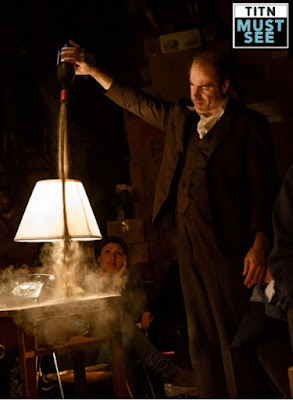
Let's not bury the lead. The Object Lesson is an extraordinary work of art. New York Theatre Workshop is known for taking risks. The Object Lesson is a giant risk. One that paid dividends. Created and performed by Geoff Sobelle, this immersive art piece takes you on a journey through objects that make us, us.
When you look at your ticket and see "general admission," you know something exciting is waiting inside. As you enter New York Theatre Workshop, the earlier the better I advise, be prepared to see the space covered in cardboard boxes and a items of the past in every nook and cranny. You're encouraged to interact with the space. Pass along boxes. Sit on others. Through your exploration, you're bound to interact with fellow theatergoers about the experience to come. As you begin to settle into your space within the space, take notice of who you're talking to as you might just be conversing with Sobelle himself. He might share an anecdote about a boxed labeled "Kafka" featuring a cockroach in a bed. Without warning, the center of the room begins to take shape. Through illusion, clowning, and storytelling, the installation piece becomes a jungle gym of wonderment. From there, Sobelle is behind the wheel of The Object Lesson. Broken up into various vignettes throughout the room, often featuring participation from the crowd, Sobelle shares memories propelled by the items he finds or searches for. The nature of the show allows you to have your own personal experience along with the piece. You are allowed to move around. You may interact and be an active participant. Or you can passively sit back and watch. Through story and design, there is a constant theme that recurs in the form of various lights and trinkets. Despite being many stories, it helps to tie the event together. Sobelle’s innate skills for storytelling are on display here. Whether aided by microphone or simply speaking unamplified, Sobelle’s narratives are captivating. He has a natural sentimentality in his voice. It’s soothing. So soothing that his meditative cadence could get you to nod off for a moment. But that could be because there are certain beats that drag on a bit too long. Especially when the pay off is eventually revealed. See that first phone call. But when the gimmick of said first call is uncovered, it’s bound to make you grin.
Director David Neumann guided Sobelle through the room of boxes and paraphernalia. The staging is intricate and precise. Every moment is well calculated. The scenic installation designed by Steven Dufala is planned clutter. At first glance, the space looks like an episode of “Hoarders,” but there is a method to Dufala’s madness. It’s overwhelming. There’s a natural intimacy to this world of boxes. But when the space reaches capacity, there’s a sense that perhaps there are too many people within the experience. The freedom to move is a bit restricted. But don’t worry if you fear that Sobelle can’t move around. Oh he can. He has no worries about moving you around. With attention to detail so important, hitting the mark was essential. The lighting design from Christopher Kuhl was mostly comprised of atmospheric practical lights. If you look up, there are very few theatrical lights in the sky. Just the essentials. Neumann and his team have provided an experience that you can only see to believe.
Geoff Sobelle’s The Object Lesson is overwhelming, just like our own lives. Whether you take Sobelle’s stories at face value or find yourself in the tales, The Object Lesson is continuing to remind audiences the diversity when it comes to how theater can be made and told. If you are fearful of immersive experiences, let The Object Lesson be your way in.